25 Prefab Construction Statistics: Key Data Points Shaping the Future of Modular Housing in 2025
Insights
minute read
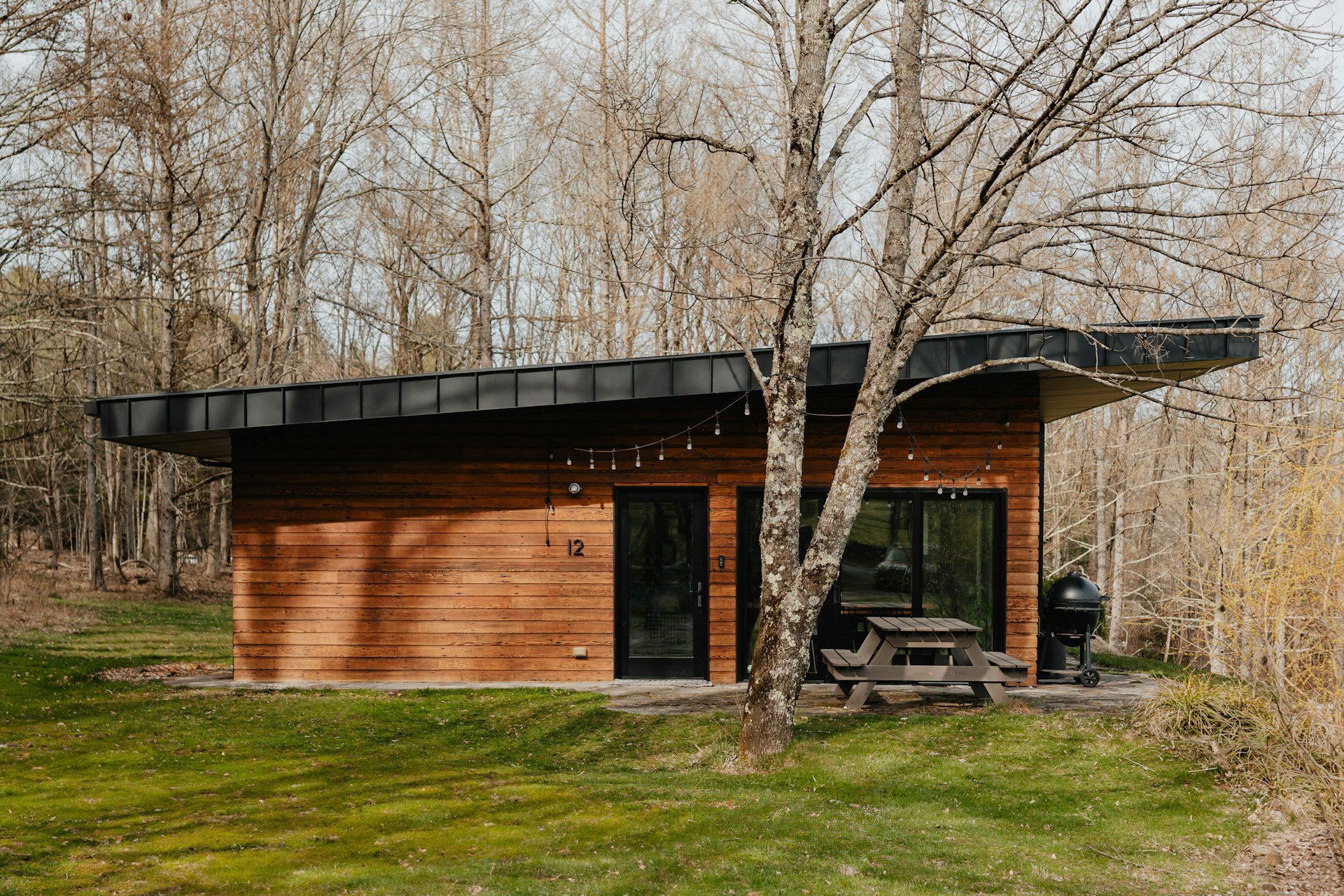
In-depth analysis of market growth, construction speed advantages, cost savings, sustainability metrics, and regional trends driving the prefab construction sector
Key Takeaways
Global prefabricated buildings market valued at $146.47 billion in 2024, projected to reach $208.10 billion by 2030 – The 6.03% CAGR reflects accelerating adoption as builders and homebuyers seek faster, more cost-effective construction alternatives to traditional site-built methods
Modular construction reduces build times by 50%, averaging 8 months versus nearly 10 months for stick-built homes – Mesocore's factory-integrated approach compresses this even further with 10-day on-site installation for the Model E ADU and 6-week completion for primary residences
Prefab homes cost 10-20% less than traditional construction, with potential savings up to 30% – Average manufactured home cost per square foot is $87 compared to $166 for conventional site-built homes, creating significant affordability advantages for cost-conscious buyers
Factory construction achieves up to 90% waste reduction – Traditional construction generates 600 million tons of debris annually, while modular methods cut waste from 25-30 kg/m² to 10-15 kg/m² through precise manufacturing and 85% material utilization rates
81% of modular adopters cite speed to market as primary driver – Additional motivators include cost efficiency (68%) and labor availability (52%), addressing the construction industry's 439,000 worker shortage
Florida shipped 7,405 manufactured homes in 2024, representing 5.7% of new housing – The state's combination of rapid population growth, hurricane vulnerability, and housing affordability crisis creates ideal conditions for factory-built solutions like hurricane-resistant modular homes
Modular buildings are 15% more energy-efficient than conventional construction – Superior insulation and airtightness from controlled factory assembly, combined with integrated solar systems, position prefab homes as leaders in sustainable housing
Market Size & Growth Statistics
1. Global prefabricated buildings market reached $146.47 billion in 2024, projected to grow to $208.10 billion by 2030
The worldwide prefab sector is experiencing steady expansion at a 6.03% CAGR as construction companies and consumers recognize the benefits of factory-built housing. This growth trajectory reflects increasing acceptance of modular methods across residential, commercial, and industrial applications. Asia-Pacific currently holds the largest market share at over 39%, driven by rapid urbanization in India and China.
2. U.S. modular construction market hit $20.3 billion in 2024, representing 5.1% of total construction activity
Despite proven advantages, modular construction captures just a fraction of the American building market. The Modular Building Institute projects this will expand to $25.4 billion by 2029 at 4.5% CAGR domestically. Current low penetration creates significant opportunity for companies offering turnkey solutions that combine modular speed with integrated systems like solar power and energy storage.
3. U.S. prefabricated buildings market estimated at $41.45 billion in 2025, expected to reach $58.41 billion by 2030
Mordor Intelligence forecasts the domestic prefab sector will grow at 7.1% CAGR over the next five years—outpacing traditional construction growth rates. The residential application segment holds 43.1% market share, while commercial applications show the fastest growth at 7.46% CAGR.
4. Factories shipped 103,300 new manufactured homes in 2024, up from 89,169 in 2023
Production volumes increased substantially year-over-year, with Census Bureau data showing the annual manufactured home shipment rate reached 106,000 units as of May 2025. More than 22 million Americans currently live in manufactured homes, demonstrating strong existing market acceptance for factory-built housing.
5. Cellular system holds the largest market share of over 35% in prefabricated buildings
Among prefab construction types, cellular systems dominate the market according to Arizton Research. Timber construction materials command 32.2% of the U.S. prefabricated buildings market, with projected growth of 7.81% CAGR through 2030 driven by sustainability preferences and aesthetic appeal.
The Speed Advantage: Timeline Statistics
6. Modular construction reduces build time by up to 50%, averaging 8 months versus nearly 10 months for stick-built homes
Factory-based building fundamentally changes construction economics by enabling parallel workflows where site preparation occurs simultaneously with module fabrication. Industry analysis confirms that the 8-10 week factory phase combined with streamlined on-site assembly means buyers move in months sooner, reducing financing costs and rental expenses.
7. 66% of building professionals sped up construction schedules using modular methods, with 35% cutting schedules by 4+ weeks
Industry surveys reveal that two-thirds of construction professionals achieved faster timelines through modular approaches. A Harvard Joint Center case study documented a 193-unit building that reduced its timeline from 24 months (traditional) to 14 months (modular)—a 10-month savings that translates directly to reduced carrying costs and faster revenue generation.
8. 85-91% of construction projects experience delays, with 60% delayed by at least 2 months
Construction delays have become the norm rather than the exception. Autodesk analysis shows median delays exceeded 200 days during 2020-2023, more than doubling pre-pandemic delays of 100 days. Weather, labor availability, and supply chain disruptions cause unpredictable timelines that modular construction largely eliminates through factory-controlled production.
9. 47.56% of traditional construction projects saw delays add more than 20% to total costs
The financial impact of delays extends far beyond extended timelines. Nearly half of all projects experienced cost overruns exceeding 20% due to delays, up from 2016. Factory completion rates of 60-95% eliminate 2-4 months of weather delays that routinely affect traditional construction.
Cost-Effectiveness: Financial Statistics
10. Modular homes typically cost 10-20% less than site-built construction, with potential savings up to 30%
Factory construction achieves cost savings through bulk material purchasing, reduced waste, improved labor productivity, and faster timelines that reduce financing and carrying costs. Industry research studies confirm these advantages become more pronounced as project complexity increases.
Key cost factors:
Material savings: Up to 20% through precise factory manufacturing and bulk purchasing
Labor efficiency: Controlled environments improve productivity
Weather independence: Eliminates costly schedule disruptions
Quality control: Reduces expensive rework and warranty claims
11. Average manufactured home cost per square foot is $87—nearly half the $166 per square foot for traditional site-built homes
Industry data reveals the dramatic cost differential between factory-built and conventional construction. The average manufactured home sold for $123,300 in 2024, while median single-family home value reached $367,282—making manufactured homes 66% less expensive on average.
12. 65% of construction professionals report lower overall project costs when using modular methods
Beyond material and labor savings, industry surveys confirm that modular construction delivers consistent budget advantages. Mesocore's Model E ADU starts at $129,000 for 410 square feet with fully integrated solar, battery storage, and hurricane-rated construction—representing delivered value that traditional builders struggle to match.
Sustainability & Environmental Impact Statistics
13. Modular construction reduces construction site waste by up to 90% compared to traditional building methods
The controlled factory environment enables precise material ordering, reuse of cut-offs across multiple projects, and systematic recycling impossible on scattered job sites. Modular Building Institute data shows this dramatic waste reduction translates to both environmental benefits and cost savings.
14. Traditional construction generates 600 million tons of debris annually—more than double municipal solid waste
EPA data highlights the massive environmental footprint of conventional construction. Traditional building produces 25-30 kg/m² of waste with 40% material wastage, while modular cuts waste to 10-15 kg/m² and boosts material utilization to 85%.
15. 77% of building professionals reported reduced construction site waste when using modular methods
More than three-quarters of professionals surveyed confirmed significant waste reduction through factory-based construction. This aligns with growing consumer demand for sustainable housing solutions that minimize environmental impact.
16. Modular buildings are 15% more energy-efficient than conventional buildings
Factory construction enables consistent application of insulation, precise air sealing, and quality control difficult to achieve in field conditions. Modular Building Institute confirms this translates to lower heating and cooling costs throughout the building's lifetime.
Mesocore's standard features amplify this advantage:
R15 walls, R24 roof, R20 floor insulation
Ductless Amana R-32 HVAC with whole-house HEPA filtration
6kW solar array with 20kWh battery storage
1,700-gallon rainwater collection with purification system
17. Modular construction reduces energy consumption during the building phase by an average of 67%
NREL analysis documents that factory-based construction uses substantially less energy during fabrication compared to traditional site-built methods. This reduction in embodied energy compounds the operational energy savings from superior building envelopes and integrated renewable energy systems.
Labor & Industry Statistics
18. Construction labor shortage requires approximately 439,000 additional workers beyond normal hiring pace
The home building industry faces severe workforce constraints that Associated Builders and Contractors estimates require more than 400,000 additional workers. Current monthly hiring rates fall far below the required 723,000 annual need, creating significant economic impact and extending traditional construction timelines.
19. Modular construction requires 50% fewer subcontractors than conventional builds
Factory-based construction addresses labor shortages by consolidating trades and reducing reliance on local labor markets. Mesocore's approach further simplifies requirements by pre-installing all MEP systems with Intertek certification before delivery, eliminating coordination of multiple specialized contractors.
20. 81% of modular adopters cite speed to market as primary driver
Modular Building Institute industry surveys reveal that speed remains the dominant adoption factor, with additional motivators including:
Cost efficiency: 68% cite as key factor
Labor availability: 52% cite as critical benefit
Quality control: Consistent factory conditions versus variable field conditions
Regional Market Statistics
21. U.S. West Region leads with $7.5 billion market size and 4.9% CAGR
Regional analysis from the Modular Building Institute shows significant geographic variation in prefab adoption:
West: $7.5 billion market size, 4.9% CAGR — Key drivers include California housing demand and tech investments
Northeast: $4.5 billion market size, 4.7% CAGR — Key drivers include dense urban markets (NYC, Boston)
South: $4.4 billion market size, 4.4% CAGR — Most populous, fastest growing region
Midwest: $4.0 billion market size, 3.8% CAGR — Key drivers include education and rural healthcare opportunities
22. Texas holds 14.2% of U.S. prefabricated buildings market share with 18,343 units shipped in 2024
Mordor Intelligence identifies Texas as the leading state for prefab construction, driven by strong population growth, affordable land, and pro-development regulatory environment.
23. Florida shipped 7,405 manufactured homes in 2024—5.7% of new housing as manufactured homes
Census Bureau data shows Florida as the second-highest state for manufactured home shipments. The state's unique combination of:
467,347 new residents added in 2024 (8.2% growth since 2020)
$411,600 median home prices
2.4 million cost-burdened households
120+ hurricanes since 1851
...creates ideal conditions for Mesocore's 180 mph wind-rated, solar-integrated modular homes manufactured in West Palm Beach.
24. California shows fastest growth at 7.95% CAGR
Despite shipping only 2,813 manufactured home units in 2024, California leads growth as severe housing shortages and regulatory reforms drive prefab adoption. ADU permits in California increased 1,421% from 2016-2021, reflecting massive demand for compact, factory-built housing solutions.
Quality Control & Future Outlook
25. Modular homes captured 2-3% of single-family market share in 2024—tripled since 2015
While still representing a small fraction of total construction, market share tripled over the past decade. The combination of housing affordability crisis, labor shortages, and growing environmental awareness positions prefab construction for continued acceleration.
Industry headwinds to watch:
State code fragmentation limiting interstate module movement
Bank underwriting bias against non-traditional collateral
Perception gaps regarding long-term resale value
Growth catalysts:
Factory inspection superiority (15-20 production stations versus 3-5 site inspections)
40-60% fewer warranty claims in first year
Rework costs of 1-2% versus 5-10% traditional
Frequently Asked Questions
What are the main advantages of prefab construction over traditional building methods?
Prefab construction offers three primary advantages: speed (50% faster completion), cost savings (10-30% reduction), and quality control (factory inspections at every production stage). Additionally, modular methods reduce construction waste by up to 90% and require 50% fewer subcontractors, addressing both environmental concerns and labor shortages.
How does Mesocore's prefab approach differ from competitors?
Mesocore integrates solar power systems, battery storage, and hurricane-resistant construction as standard features rather than expensive add-ons. The Model E ADU ships with a 6kW solar array, dual 10kWh lithium-ion batteries, and 180 mph wind ratings—all factory-installed and Intertek-certified before delivery. This eliminates coordination of multiple contractors while reducing costs 10-20% compared to traditional construction plus separate solar installation.
What financial incentives are available for prefab modular homes in Florida?
Florida buyers benefit from multiple incentives including the 30% federal solar tax credit (through 2032), 0% sales tax on solar equipment, and property tax exemptions for renewable energy installations. Hurricane mitigation features qualify for 20-55% wind premium discounts. The state's "Granny Flat" property tax reduction offers up to 20% reduction for senior relative occupancy.
How do modular homes perform in hurricanes compared to traditional construction?
Modern modular homes meeting post-1994 HUD wind safety standards experienced zero significant damage during the intense 2004 and 2005 hurricane seasons according to federal studies. Mesocore's 180 mph wind rating exceeds Category 5 hurricane thresholds (157 mph) and meets Florida's High Velocity Hurricane Zone requirements for Miami-Dade and Broward counties.
What is the typical timeline for Mesocore's prefab home installation?
Mesocore's Model E ADU completes on-site installation in 10 days after site preparation, while the Model A primary residence achieves completion in 6 weeks. Total timeline from order to move-in ranges from 12-26 weeks—compared to 7-15 months for traditional construction. Factory production occurs simultaneously with site preparation, eliminating sequential delays.
Ready to see if your property qualifies?
Start with a free ADU Space Check in minutes.
Planning your ADU starts with understanding your property.
