25 Modular Home Manufacturing Statistics: Essential Data Points for 2025
Insights
minute read
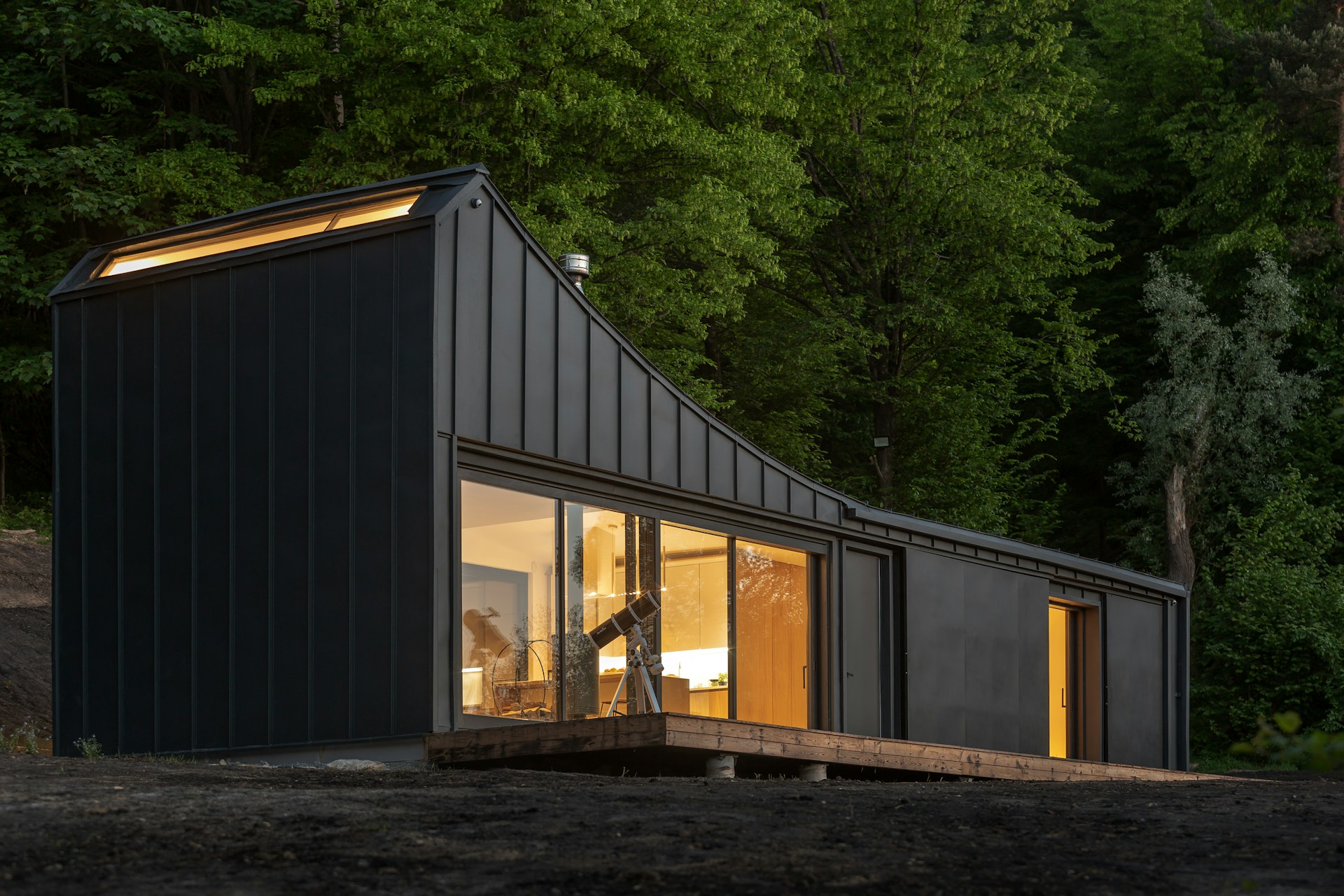
A data-backed analysis of market growth, construction efficiency, cost advantages, and sustainability trends shaping the factory-built housing industry across US residential markets
Key Takeaways
The global modular construction market reached $90.3 billion in 2024 and is projected to hit $155.2 billion by 2033—The US segment alone represents $20.3 billion with 5.1% of total construction activity, indicating massive growth potential as builders and homebuyers recognize the time and cost advantages of factory-built solutions like Mesocore's Model E ADU.
Modular construction delivers projects 50% faster than traditional building methods—Factory production in 3-4 months compared to 7-15 months for conventional builds eliminates weather delays and reduces subcontractor coordination, while Mesocore's 10-day on-site installation for ADUs sets new industry benchmarks.
Factory-built homes cost 10-25% less than site-built construction—With modular homes averaging $80-$160 per square foot versus $150-$250 for traditional builds, and manufactured homes selling for 66% less than median single-family homes, affordability advantages are substantial.
North America has 255 modular manufacturing companies, while 103,314 manufactured homes were produced in 2024—A 16% increase from 89,169 units in 2023 demonstrates accelerating factory-built housing adoption as 81% of industry professionals cite speed to market as the primary driver.
The ADU market will grow from $18 billion to $43.35 billion by 2034 at 9.19% CAGR—Modular ADUs now capture 53% of installations, with 61% of municipalities permitting accessory dwelling units and 33% of interested consumers preferring prefab construction.
85% of manufactured home residents report satisfaction with their housing choice—Representing a 7% increase from 2018, this metric underscores the quality improvements in factory-built housing that address 20.6 million Americans currently living in manufactured or mobile homes.
Solar+storage attachment rates quadrupled from 6% to 40% between 2020-2025—Integrated sustainability features have become standard expectations, with 58% of homeowners preferring energy-efficient designs and Mesocore including 6kW solar arrays with 20kWh battery storage as standard equipment.
Understanding the Growth of Modular Construction: Key Market Statistics
1. Global Modular Market Valued at $90.3 Billion in 2024
The global modular construction market was valued at $90.3 billion in 2024 and is expected to reach $155.2 billion by 2033, growing at a 6.2% CAGR. This expansion reflects growing recognition of modular construction's advantages in speed, quality control, and cost efficiency. The US market specifically reached $20.3 billion in 2024, accounting for 5.1% of total construction activity—still representing significant headroom for growth.
2. US Modular Market Projected to Reach $25.4 Billion by 2029
Industry projections show the US modular market will hit $25.4 billion by 2029 at a 4.5% CAGR, outpacing broader construction industry growth by 1.3% and positioning factory-built housing as one of the fastest-growing construction sectors.
3. ADU Market Growth Outpaces General Modular Sector
The accessory dwelling unit market demonstrates even stronger momentum, projected to grow from $18 billion to $43.35 billion by 2034 at 9.19% CAGR. Modular ADUs now capture 53% of installations, driven by rapid deployment capabilities and consistent quality that traditional construction struggles to match. Mesocore's Model E ADU directly addresses this demand with factory-integrated solar and hurricane-resistant construction starting at $129,000.
Speed and Efficiency: Statistics on Modular Home Construction Timelines
4. Modular Homes Complete 50% Faster Than Traditional Builds
Factory-based construction fundamentally changes project economics. Modular construction completes in 3-4 months versus 7-15 months for traditional building—approximately 50% faster. This speed advantage stems from parallel workflows where site preparation occurs simultaneously with factory production, eliminating the sequential delays that plague conventional construction.
5. 81% of Industry Professionals Cite Speed as Primary Driver
Speed to market (81%) ranks as the top driver for modular adoption, followed by cost efficiency (68%) and labor availability (52%). These priorities align with market conditions where construction delays have become the norm rather than the exception. Mesocore's Model E achieves 10-day on-site installation after site preparation, while the Model A house completes in 6 weeks—timelines impossible with traditional methods.
6. Factory Production Eliminates 60-95% of Weather Exposure
Traditional construction faces unpredictable delays from weather, with projects routinely extending by months due to rain, heat, or cold. Factory construction eliminates weather exposure by 60-95% by completing 80% or more of work in climate-controlled environments. This reliability proves essential in markets like Florida where afternoon thunderstorms and hurricane season regularly disrupt outdoor construction schedules.
7. Factory Approach Requires 50% Fewer Subcontractors
Skilled labor shortages represent a critical constraint on traditional construction capacity. Factory-based modular construction requires 50% fewer subcontractors than conventional building, while 65% of construction firms are now adopting modular ADUs specifically to reduce build time and labor costs.
Cost Savings & Financial Benefits of Modular Homes: Data Insights
8. Modular Homes Cost 10-25% Less Than Traditional Construction
The cost advantages of factory-built housing are substantial and well-documented. Modular homes cost $80-$160 per square foot for complete, installed homes, while traditional homes average $150-$250 per square foot—making modular construction 10-25% cheaper overall.
9. Manufactured Homes Sell for 66% Less Than Median Single-Family
In 2024, manufactured homes sold for 66% less than all single-family homes, with median prices of $123,300 versus $367,282. The average manufactured home was $109,400 in 2024, down nearly 4% from the previous year, with an average of $93.71 per square foot.
10. Factory Settings Enable 27-65% Cost Savings
Beyond base construction costs, factory settings enable 27-65% savings compared to site-built equivalents through bulk purchasing and waste reduction. These efficiencies translate directly to buyer savings, making quality housing accessible to the 70% of residents who cite affordability as their key driver.
11. ADU-Equipped Homes Command 35% Premium
Properties with accessory dwelling units sell at 35% premiums over comparable properties without secondary units. ADU investments deliver 10-13% annual ROI in Florida markets with payback periods of 5.8-10 years, while Florida ADU rental income reaches $1,545-$2,102 monthly in Pinellas County markets. For buyers exploring financing options, HFS Financial offers personal loans of $1,000-$300,000 with no home equity required.
Hurricane Resilience and Safety: Statistics on Engineered Modular Housing
12. 180 MPH Wind Ratings Exceed Category 5 Thresholds
Florida's hurricane exposure makes structural resilience a non-negotiable requirement. Mesocore's hurricane-resistant homes carry 180 mph wind ratings meeting Florida's High Velocity Hurricane Zone (HVHZ) requirements—exceeding Category 5 hurricane thresholds of 157 mph. Federal studies examining manufactured homes built after 1994 HUD wind safety standards found zero significant damage during the intense 2004 and 2005 hurricane seasons.
Sustainability and Off-Grid Capability: Modular Home Statistics
13. Solar+Storage Attachment Rates Quadrupled in Five Years
Residential solar+storage rates surged from 6% to 40% between 2020-2025, reflecting growing consumer demand for energy independence and backup power capabilities. This trend aligns with Mesocore's standard inclusion of 6kW solar arrays with dual 10kWh lithium-ion batteries (20kWh total storage) in every unit.
14. 58% of Homeowners Prefer Energy-Efficient ADU Designs
Sustainability has moved from niche preference to mainstream priority. 58% of homeowners prefer energy-efficient ADU designs with sustainable materials, while 45% of ADUs integrate smart home technology or sustainable construction materials. These preferences favor manufacturers like Mesocore that include solar, battery storage, and rainwater collection as standard equipment rather than costly add-ons.
15. Modular Construction Reduces Waste by 50-67%
Factory production achieves substantial environmental benefits. Modular construction reduces waste from 25-30 kg/m² to 10-15 kg/m² compared to traditional building—a 50-67% reduction. The controlled factory environment enables precise material ordering, systematic recycling, and reuse of cut-offs across multiple projects.
Addressing Housing Needs: Statistics on ADU and Emergency Housing Solutions
16. 61% of Municipalities Now Permit ADUs
Regulatory barriers to accessory dwelling units have fallen dramatically. 61% of municipalities now permit ADUs, up substantially from a decade ago. California alone permitted 26,924 units in 2023, demonstrating the scale of demand when regulations accommodate secondary housing.
17. 33% of ADU-Interested Consumers Prefer Modular/Prefab
Among consumers interested in ADUs, 33% prefer modular/prefabricated construction due to rapid deployment and reduced labor requirements. This preference creates natural market fit for Mesocore's factory-built approach, which delivers complete units in weeks rather than months.
18. 20.6 Million Americans Live in Manufactured Homes
The scale of factory-built housing in America is substantial. Approximately 20.6 million Americans live in manufactured or mobile homes, supported by 44,000 manufactured home communities across the country. 55% of manufactured homes are placed in community settings, while manufactured homes account for 9.3% of annual new home starts.
Quality Control and Certification: Statistics on Factory-Built Advantages
19. 85% Resident Satisfaction Rate Demonstrates Quality
Factory-built housing quality has improved dramatically. 85% of residents are satisfied with their manufactured home—a 7% increase from 2018. This satisfaction stems from quality control advantages inherent in factory production, where inspections occur at every production stage rather than after critical work is complete.
Florida Housing Market Dynamics: Statistics for Modular Home Adoption
20. 103,314 Manufactured Homes Produced in 2024—Up 16% from 2023
US manufacturers produced 103,314 manufactured homes in 2024, up from 89,169 in 2023—a 16% increase demonstrating accelerating market adoption. By May 2025, the annual shipment rate climbed to 106,000 units, a 13% rebound from early 2023 lows.
21. South Region Represents $4.4 Billion in Modular Activity
Regional data shows strong performance across US markets. The South region represents $4.4 billion in modular construction with a 4.4% CAGR, while the West leads at $7.5 billion with 4.9% CAGR. Florida's combination of population growth, housing affordability challenges, and hurricane exposure creates ideal conditions for integrated modular solar solutions.
22. 255 Modular Manufacturers Operate in North America
The industry infrastructure continues expanding. 255 modular companies operate in North America as of 2024, while 38 manufactured home builders operate from 152 plants across the country. This manufacturing base supports the growing demand for factory-built housing solutions.
23. Modular Multifamily Construction Reached Highest Level in Two Decades
Modular multifamily construction has risen 7%—its highest level in two decades—reflecting broader adoption beyond single-family applications. The multifamily residential segment was valued at $7.1 billion in 2024 and is expected to reach $11.3 billion by 2029 at a 4.7% CAGR.
Frequently Asked Questions
How much faster is modular home construction compared to traditional building?
Modular construction completes in 3-4 months on average—approximately 50% faster than traditional building methods that typically require 7-15 months. This speed advantage comes from parallel workflows where factory production occurs simultaneously with site preparation. Mesocore's Model E ADU achieves 10-day on-site installation, while the Model A house completes in 6 weeks after delivery.
Are modular homes truly hurricane-resistant?
Modern modular homes built to current standards demonstrate excellent hurricane resistance. Mesocore's units carry 180 mph wind ratings that exceed Category 5 hurricane thresholds of 157 mph. Federal studies examining manufactured homes built after 1994 HUD wind safety standards found zero significant damage during the intense 2004 and 2005 hurricane seasons, demonstrating that factory-built homes meeting modern standards withstand severe weather better than older conventional construction.
What are the key statistics around ADU market growth?
The ADU market is projected to grow from $18 billion in 2024 to $43.35 billion by 2034 at 9.19% CAGR. Modular ADUs now capture 53% of new installations, with 61% of municipalities permitting accessory dwelling units. ADU-equipped homes sell at 35% premiums, while ADU investments deliver 10-13% annual ROI in Florida markets with payback periods of 5.8-10 years.
How do integrated solar systems in modular homes contribute to sustainability?
Solar+storage attachment rates have quadrupled from 6% to 40% between 2020-2025, reflecting growing demand for energy independence. Factory-integrated solar eliminates the 60-90 days typically required for separate installation while ensuring optimal system design. Mesocore's standard 6kW solar array with 20kWh battery storage provides multi-day energy autonomy for immediate off-grid capability, with annual utility savings of $1,500-$1,820.
Ready to see if your property qualifies?
Start with a free ADU Space Check in minutes.
Planning your ADU starts with understanding your property.
