28 Florida Solar Adoption Statistics: Key Data Points Every Homeowner Should Know in 2025
Insights
minute read
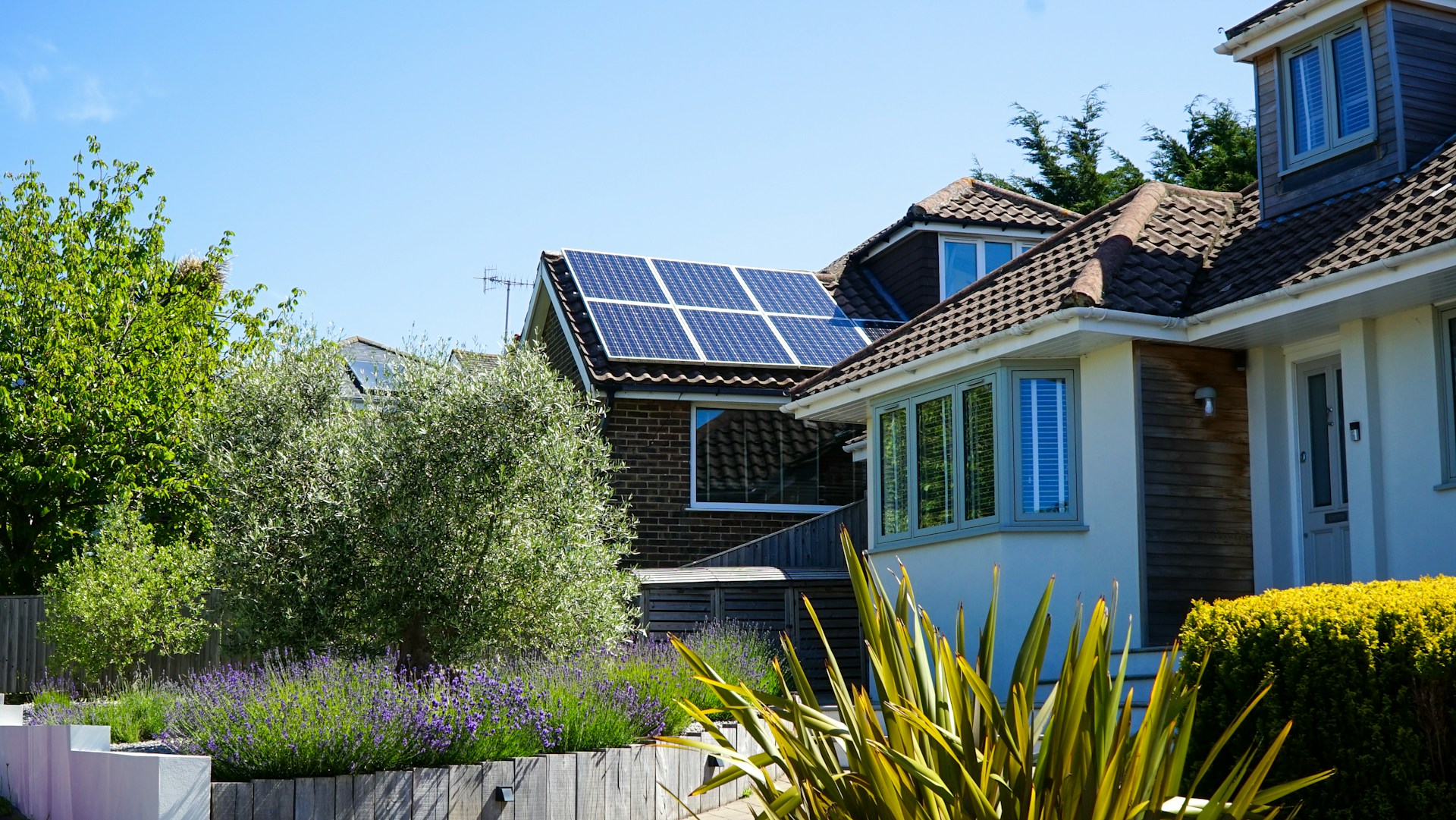
Comprehensive analysis of Florida's solar capacity growth, financial incentives, residential adoption trends, energy storage expansion, and hurricane resilience driving the Sunshine State's transformation into America's solar powerhouse
Key Takeaways
Florida ranks 3rd nationally with 14,303 MW installed — Mesocore's factory-integrated 6kW solar systems with 20kWh battery storage position buyers to capitalize on the state's aggressive renewable energy expansion while achieving immediate energy independence
Solar now provides 9.80% of electricity, tripling from 3% in 2020 — This rapid adoption validates integrated solar-home solutions like Mesocore's Model E ADU, which ships with complete solar and battery systems pre-installed
Florida surpassed California in utility-scale solar additions for the first time in 2024 — With 3 GW utility-scale solar built last year, the state demonstrates that favorable geography and streamlined permitting drive massive solar growth even without aggressive renewable mandates
Solar prices have fallen 42% since 2015 while delivering average 25-year savings of $40,676 — Combined with Mesocore's factory-integrated approach that eliminates separate solar contractor coordination, Florida homeowners access unprecedented value
Florida's 560 MW storage capacity is expanding to 4 GW by 2033 — Mesocore's standard dual 10kWh lithium-ion batteries align with this solar+storage trend, providing multi-day backup power during the frequent outages that have left millions without electricity during hurricanes
The state employs 14,108 solar workers across 447 companies — This robust installer network supports Mesocore's hurricane-resistant modular homes with 180 mph wind ratings, addressing Florida's unique combination of solar abundance and storm vulnerability
Florida's Emergence as a Solar Powerhouse: What the Statistics Say
1. Florida has 14,303 MW of total solar capacity installed, ranking 3rd nationally behind California and Texas
The Sunshine State has transformed into a major solar market with 14,303 MW installed as of Q2 2025. This capacity represents a dramatic shift from just five years ago when Florida lagged far behind other sun-rich states. The state's 3rd national ranking demonstrates that favorable solar resources, combined with growing consumer demand for energy independence, can drive rapid adoption even without the aggressive renewable mandates seen in California.
2. Florida installed 3,385 MWac of solar capacity in 2024, ranking 3rd nationally for annual additions
Annual installation volume reached 3,385 MWac in 2024, cementing Florida's position among America's fastest-growing solar markets. This growth reflects both utility-scale expansion and accelerating residential adoption, with the NREL data showing consistent year-over-year increases. For homeowners considering integrated solar solutions, this installation momentum means experienced contractors, established supply chains, and proven technology are readily available.
3. Florida built 3 gigawatts of utility-scale solar in 2024, surpassing California for the first time
In a milestone achievement, Florida surpassed California in utility-scale solar construction for the first time in 2024. This shift reflects Florida's streamlined permitting environment and abundant land suitable for solar development. While large utilities drive most of this growth, residential solar remains essential for homeowners seeking energy independence—particularly those in hurricane-prone areas where grid reliability remains a persistent concern.
4. Florida's solar capacity has grown dramatically, reaching 14,303 MW by Q2 2025, solidifying its position as a national leader
Florida's solar capacity has grown dramatically, reaching 14,303 MW (14.3 GW) by Q2 2025, solidifying its position as a national leader. This growth trajectory creates opportunities for homeowners to benefit from mature solar ecosystems with competitive pricing and experienced installation networks. Mesocore's factory-integrated approach bypasses traditional installation bottlenecks by shipping homes with complete solar systems pre-installed and tested.
5. Florida's total solar investment has reached $31.7 billion
Cumulative investment of $31.7 billion demonstrates solar's economic significance to Florida. This capital has funded manufacturing facilities, installation businesses, and infrastructure supporting continued growth. For homebuyers, this investment translates to a mature market with established financing options, quality equipment, and experienced service providers—all factors that reduce risk when purchasing solar-equipped homes.
Florida Solar Incentives: Maximizing Your Investment with Key Statistics
6. The 30% federal solar tax credit is available for systems installed through December 31, 2025, significantly reducing system costs
Florida homeowners benefit from a 30% federal tax credit that applies to solar panels, battery storage, and installation costs for systems installed by December 31, 2025. Homeowners must have their systems fully installed and operational by this date to claim the credit, as it is set to expire in 2026. For Mesocore buyers, this credit applies to the integrated solar and battery systems included with every unit, providing substantial savings from day one. Combined with Florida's tax incentives including 0% sales tax on solar equipment and property tax exemptions, the financial case for solar-integrated homes becomes compelling.
7. 84% of Florida voters supported net metering in a February 2022 poll
Overwhelming bipartisan support—84% of voters including 76% of Republicans—demonstrates net metering's popularity among Florida residents. This policy allows solar homeowners to receive retail rate credits for excess electricity sent to the grid, improving return on investment for residential systems. Political support suggests net metering will remain available for new solar installations, protecting the investment value of solar-equipped homes.
8. Average payback period for Florida solar installations is 10.5 years
Palmetto data shows Florida homeowners typically achieve 10.5-year payback periods on solar investments, after which electricity is essentially free for the remaining 15+ years of system life. Mesocore's approach improves this equation by eliminating separate solar installation costs—systems ship pre-installed rather than requiring coordination with solar contractors after home construction.
9. Average 25-year savings from solar installation reach $40,676 in Florida
EcoWatch analysis confirms Florida homeowners save an average of $40,676 over 25 years from residential solar systems. These savings compound with Mesocore's energy-efficient construction, which reduces baseline energy needs through R15 walls, R24 roof insulation, and Energy Star appliances. Lower consumption means solar systems can offset a higher percentage of total energy needs, accelerating payback and maximizing lifetime savings.
Top Florida Solar Companies and Their Impact
10. Florida Power & Light operates 7.1 GW of solar capacity—70%+ of new installations in 2024
FPL dominates Florida's solar landscape with 7.1 GW operational capacity and plans to expand to 24.5 GW by 2034. While utility-scale solar provides grid power, it doesn't protect individual homes during outages. Residential solar with battery storage—like Mesocore's integrated systems—provides backup power when the grid fails, a critical consideration given Florida's hurricane vulnerability.
11. Duke Energy Florida is adding nearly 300 MW by early 2027, reaching 30 solar sites by end of 2025
Duke Energy's expansion to 300 MW and 30 solar sites demonstrates continued utility commitment to solar development. This utility-scale growth complements residential solar by improving overall grid mix while homeowner-owned systems provide individual energy security. The combination ensures both macro grid improvements and micro-level resilience.
12. Florida employs 14,108 solar workers across 447 companies
The solar industry supports 14,108 jobs across 447 companies including 57 manufacturers, 225 installers/developers, and 165 supporting businesses. This robust workforce ecosystem ensures competitive pricing, quality installation services, and ongoing maintenance support for residential solar systems throughout Florida.
The Economics of Residential Solar: Statistics on Home Solar System Adoption in Florida
Average Utility Savings with Residential Solar in Florida
13. Nearly 30,000 Floridians installed solar in 2024, bringing total installations to over 253,000
Florida's residential solar market added nearly 30,000 installations in 2024, contributing to more than 253,000 total residential systems statewide. This adoption rate reflects growing awareness of solar's financial benefits combined with concern about grid reliability during hurricane season. Mesocore addresses both motivations with sustainable homes that include complete solar systems as standard equipment.
14. Florida ranked #2 nationally for residential solar installations annually from 2019 through 2024
Consistent ranking as the second-largest residential market demonstrates sustained homeowner interest in solar adoption. This multi-year trend indicates mature consumer awareness, established financing mechanisms, and reliable installer networks—all factors that reduce friction for new solar homeowners.
15. Generation from small-scale solar installations was 8 times greater in 2024 than in 2019
The EIA documents 8x growth in small-scale solar generation over five years, outpacing utility-scale expansion on a percentage basis. This acceleration reflects improving economics, increasing consumer awareness, and growing concern about grid reliability. For Mesocore buyers, factory-integrated solar eliminates the 60-90 day timeline typically required for separate solar installation.
Solar's Impact on Florida Home Values
16. Average solar panel costs in Florida range from $2.53-$3.04 per watt before incentives
Florida's competitive solar market delivers pricing of $2.53-$3.04 per watt—below the national average of $3.13 per watt. For a typical 11.5 kW system, this translates to $29,095 before the 30% federal tax credit reduces net cost to approximately $20,367. Mesocore's factory integration achieves additional savings by eliminating separate contractor coordination and installation overhead.
17. Solar prices in Florida have fallen 42% over the last 10 years
The dramatic 42% price decline over a decade has transformed solar from premium upgrade to mainstream investment. Combined with rising utility rates and increasing battery storage adoption, this price trajectory makes solar-integrated homes increasingly attractive compared to conventional construction requiring separate solar installation.
Beyond the Panels: Energy Storage and Off-Grid Capabilities in Florida Solar
The Rise of Solar+Storage in Florida
18. Florida has 560 MW of total energy storage capacity, with FPL controlling 520 MW
Current storage capacity of 560 MW provides grid-level backup while residential storage adoption accelerates. FPL's dominance with 520 MW reflects utility-scale deployment, leaving significant opportunity for residential storage growth. Mesocore's 20kWh battery systems (dual 10kWh lithium-ion units) provide home-level storage that operates independently of grid-scale infrastructure.
19. FPL is targeting 4 GW of energy storage capacity by 2033, doubling previous plans
Ambitious expansion to 4 GW storage by 2033 signals utility recognition that solar must pair with storage to address intermittency and peak demand. This grid-level investment complements residential battery systems, creating a layered resilience approach where both utility and homeowner storage contribute to overall system reliability.
Off-Grid Living: A Growing Trend in Florida
20. Some Florida jurisdictions have approved Mesocore ADUs to operate independently without utility hookups
Palm Beach County and other Florida jurisdictions have approved Mesocore's integrated solar and battery systems for independent operation—no utility connection or separate meter required. This off-grid capability eliminates connection fees, meter costs, and ongoing utility expenses while maintaining full functionality. For property owners seeking rental income from ADUs, eliminating utility infrastructure requirements can accelerate project timelines and reduce total costs.
Florida's Renewable Energy Future: Investment and Policy Statistics
21. Florida is projected to add 12,974 MW of solar capacity over the next 5 years, ranking 4th nationally
SEIA projections show 12,974 MW added through 2029, nearly doubling current installation base. This growth trajectory ensures continued market maturation with improving technology, declining costs, and expanding financing options. Homebuyers entering the market now position themselves to benefit from this ongoing evolution.
22. By 2034, solar will account for 35% of FPL's annual power output
FPL's plan for solar to reach 35% of annual output by 2034 represents a fundamental grid transformation. This shift reduces Florida's dependence on natural gas while potentially stabilizing long-term electricity prices. Homeowners with their own solar systems benefit from both grid improvements and direct generation, providing multiple layers of value.
23. In 2024, Florida solar plants saved FPL customers $218 million in gas-related fuel costs
Direct cost avoidance of $218 million from solar displacing natural gas demonstrates concrete financial benefits flowing to ratepayers. These grid-level savings supplement the direct bill reductions that residential solar provides, creating compounding value for solar adoption at all scales.
Hurricane Resilience and Solar: Statistics on Protecting Your Florida Home
Solar Systems as a Resilience Booster in Hurricane-Prone Florida
24. Florida has experienced 120+ hurricanes since 1851—more than any U.S. state
The Florida Climate Center documents 120+ hurricanes hitting the state since 1851, creating an unmatched requirement for resilient construction and backup power systems. Hurricane Irma left 6.7 million customers without power, and Hurricane Ian impacted over 2 million. These outages lasting days or weeks make battery-backed solar systems essential rather than optional.
25. Solar panels are designed to withstand wind speeds up to 150 mph
Modern solar installations withstand 150 mph winds, providing resilience during most hurricane conditions. Mesocore's 180 mph wind-rated construction exceeds even this standard, ensuring both home structure and solar systems survive Category 5 storms. This integrated approach to resilience—combining hurricane-rated construction with battery-backed solar—addresses Florida's defining housing challenge.
26. Solar plants under 75 megawatts are exempt from lengthy permitting reviews in Florida
Streamlined permitting for projects under 75 MW has accelerated Florida's solar growth by removing regulatory barriers. While this primarily affects utility-scale development, the permitting philosophy extends to residential projects where many jurisdictions offer expedited approval processes for solar installations. Mesocore's Intertek-certified factory-installed systems further streamline permitting by eliminating rough-in inspections in many jurisdictions.
Beyond Solar Panels: Understanding the Broader Renewable Energy Landscape in Florida
27. Solar now provides 9.80% of Florida's total electricity generation, up from 3% in 2020
The tripling of solar's grid contribution from 3% to 9.80% in just four years demonstrates the pace of Florida's energy transition. This rapid shift reflects both utility-scale deployment and residential adoption working together to transform the state's energy mix. Installed solar can now power 2,368,717 homes—a number that will continue growing as projections suggest solar will represent 35% of major utility output by 2034.
28. Florida's solar production increased 22.6% from August 2024 to August 2025
Year-over-year production growth of 22.6% demonstrates that installed capacity translates to actual electricity generation. Florida now represents 6.4% of national production, a share that continues growing as new installations come online. This production growth validates both the solar resource available in Florida and the effectiveness of installed systems.
For homeowners seeking to capitalize on Florida's solar transformation while addressing the state's hurricane vulnerability, Mesocore's integrated approach combines factory-installed solar systems, battery storage, and 180 mph wind-rated construction into a single turnkey solution. With financing options available through HFS Financial offering loans up to $300,000 with no home equity required, Florida residents can access complete solar-powered, hurricane-resistant housing without coordinating multiple contractors or navigating complex installation timelines.
Frequently Asked Questions
How much solar capacity does Florida have installed?
Florida has 14,303 MW installed as of Q2 2025, ranking 3rd nationally behind California and Texas. This capacity can power approximately 2,368,717 homes and represents $31.7 billion in cumulative investment. The state added 3,385 MW in 2024 alone, with projections for nearly 13,000 MW additional capacity over the next five years.
What government incentives are available for solar in Florida?
Florida offers multiple solar incentives including 0% state sales tax on solar equipment, property tax exemptions for renewable energy installations (meaning solar doesn't increase taxable home value), and the federal 30% solar tax credit for systems installed through December 31, 2025. Homeowners must have their systems fully installed and operational by this date to claim the credit, as it is set to expire in 2026. Additionally, Florida's "Granny Flat" provision offers property tax reductions up to 20% for ADUs housing relatives 62 or older. Net metering allows homeowners to receive retail rate credits for excess electricity sent to the grid.
How do solar panels perform during a hurricane in Florida?
Modern solar panels are designed to withstand 150 mph winds, providing resilience during most hurricane conditions. Babcock Ranch—a solar-powered community—stayed online during Hurricane Ian while 2.6 million other Florida customers lost power. For maximum protection, Mesocore's 180 mph wind-rated homes exceed standard solar panel durability, with integrated battery storage providing backup power even when panels are temporarily unavailable.
What are the average utility savings from installing solar in Florida?
Florida homeowners typically save $40,676 over 25 years from residential solar systems, with payback periods averaging 10.5 years. After payback, electricity is essentially free for the remaining 15+ years of system life. Mesocore's integrated systems deliver $1,500-$1,820 annual utility savings while eliminating the 60-90 days typically required for separate solar installation coordination.
Does installing solar increase my property taxes in Florida?
No. Florida provides a property tax exemption for renewable energy equipment, meaning solar panels and battery storage systems do not increase your home's taxable value. This exemption applies to both new installations and solar equipment included with new home purchases, protecting homeowners from increased tax burden while still providing full energy savings benefits.
Ready to see if your property qualifies?
Start with a free ADU Space Check in minutes.
Planning your ADU starts with understanding your property.
