24 Florida Hurricane Impact Statistics Every Homeowner Should Know in 2026
Insights
minute read
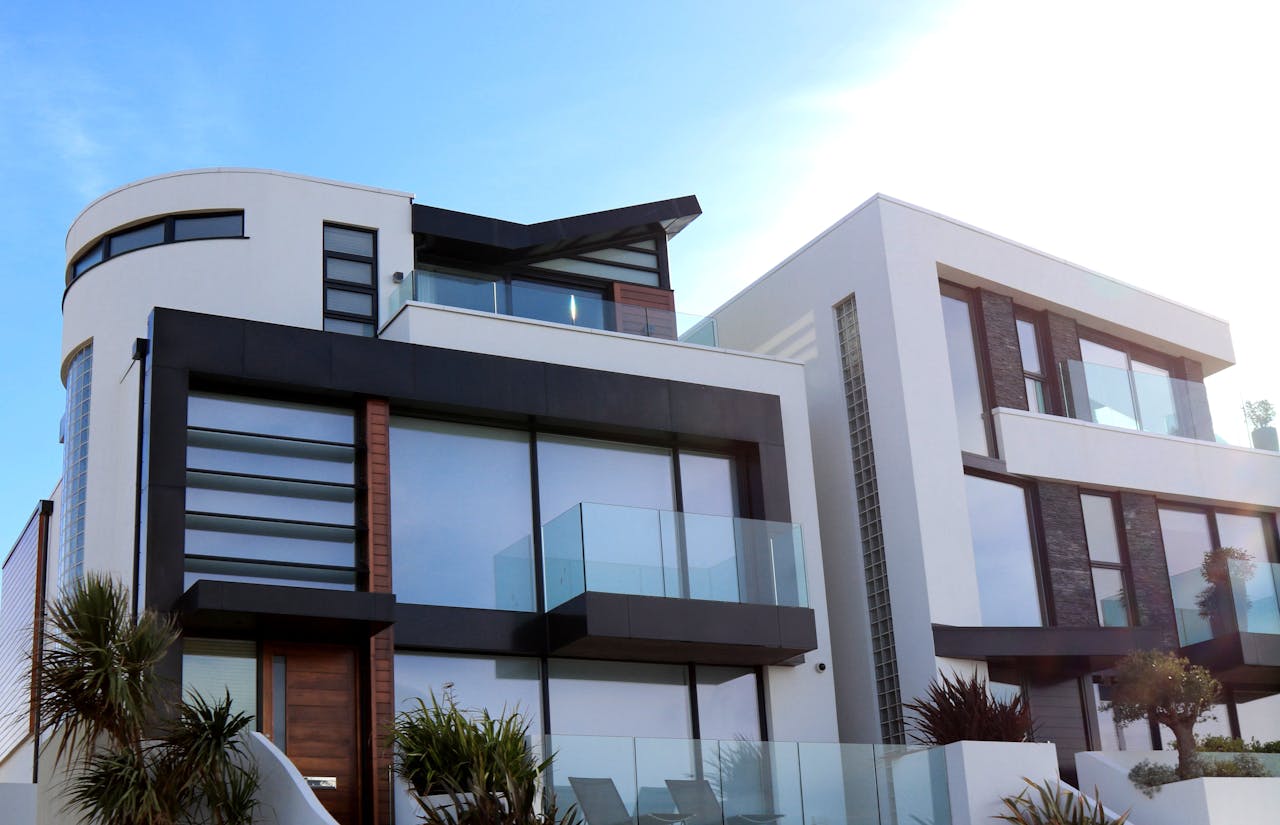
Critical data on storm frequency, economic damage, building code performance, and construction resilience shaping housing decisions in America's most hurricane-vulnerable state
Key Takeaways
Florida faces 41% of all U.S. hurricanes with $450 billion in cumulative disaster costs since 1980—making hurricane-resistant construction essential rather than optional for homeowners in the Sunshine State
The 2024 hurricane season caused $182.7 billion in total U.S. damages across 27 billion-dollar disasters—emphasizing the critical need for resilient construction as climate-driven weather events intensify
Florida Building Code compliance reduces windstorm losses by up to 72%—with every $1 invested in code-compliant construction saving $8 in structural damage, while modern codes decreased post-hurricane mortgage delinquency rates by approximately 50%
Homes with hurricane mitigation features qualify for 20-55% insurance premium discounts—and command 2.4% higher sale prices, creating immediate financial returns on resilience investments
Round and modular hurricane-resistant homes achieve 99.9% survival rates in direct hits from major hurricanes—demonstrating that factory-built construction meeting modern wind standards outperforms older conventional buildings during severe weather events
NOAA projects 13-19 named storms for the 2025 hurricane season with 6-10 becoming hurricanes—reinforcing the urgency for Floridians to invest in resilient housing that protects families and assets
Understanding Florida's Hurricane History: Key Statistics
1. Florida has experienced over 120 hurricanes since 1851—more than any other U.S. state
The Florida Climate Center documents that every stretch of Florida's coastline has been impacted by at least one hurricane since 1850, with the state experiencing an average of 0.73 hurricanes per year. This persistent exposure makes Florida the epicenter of hurricane risk in the continental United States. Florida faces 41% of all U.S. hurricanes, placing extraordinary pressure on housing infrastructure and demanding construction methods that can withstand repeated storm exposure over decades.
2. The 2024 Atlantic hurricane season produced 18 named storms, with 11 becoming hurricanes and 5 major hurricanes
The 2024 season tied for fourth-highest on record with 5 hurricanes making U.S. landfall. This level of activity reflects a broader pattern, with tropical cyclone intensity increasing noticeably over the past three decades. For Florida homeowners, these statistics reinforce that major hurricane seasons are no longer exceptional—they're the new normal.
3. Since 1980, the U.S. has sustained 403 weather and climate disasters exceeding $1 billion each
The cumulative cost for these disasters exceeds $2.915 trillion, with tropical cyclones responsible for over $1.5 trillion in damage and 7,211 deaths. The average cost per tropical cyclone event reaches $23 billion—dwarfing other disaster types and underscoring why hurricane-prone regions require fundamentally different approaches to housing construction.
Hurricane Force: Categorization and Wind Speed Impact in Florida
4. Hurricane Milton intensified by 90 mph in just 24 hours—among the highest rapid intensification rates ever observed
This record-setting intensification demonstrates that Florida residents can face minimal warning before a moderate tropical storm becomes a catastrophic major hurricane. Traditional construction timelines of 7-15 months leave homeowners vulnerable during unpredictable hurricane seasons. Mesocore's Model E ADU, which completes on-site installation in just 10 days after site preparation, addresses this urgency by enabling rapid deployment of 180 mph-rated structures.
5. Miami-Dade and Broward Counties require 160-170 mph wind design standards—the most demanding in the nation
Florida's High Velocity Hurricane Zone (HVHZ) standards exceed Category 5 thresholds of 157 mph, while northern Florida coastal counties require 140 mph design standards. These requirements exist because wind damage escalates exponentially—not linearly—with wind speed increases. Mesocore's 180 mph wind rating exceeds even HVHZ requirements, providing documented protection through robotically welded structural steel frames and impact-rated windows and doors.
Economic Aftermath: Unpacking Hurricane Damage in Florida
6. The 2024 hurricane season caused $182.7 billion in total U.S. damages across 27 billion-dollar disasters
According to NOAA data, 2024 ranked as the fourth-costliest year on record, trailing only 2017 ($395.9 billion), 2005 ($268.5 billion), and 2022 ($183.6 billion). The five-year annual average for billion-dollar disasters reached $149.3 billion—more than double the 45-year average of $64.8 billion.
7. Florida has suffered approximately $450 billion in cumulative disaster costs since 1980—leading all U.S. states
This staggering total reflects Florida's unique vulnerability as the state with highest hurricane exposure and extensive coastal development. Between 2020 and 2024, the U.S. experienced 115 billion-dollar disasters, averaging 23 events annually—nearly double the historical average and creating sustained pressure on housing infrastructure.
8. The 2024 hurricane season destroyed over $20.3 billion in agricultural crops nationwide
The American Farm Bureau Federation documented that approximately $9.4 billion remained uninsured or fell outside policy coverage. In Florida specifically, 2024 hurricanes destroyed $155 million in peppers, $50 million in nursery crops, and $48 million in peanuts—economic impacts that ripple through local communities for years.
Building Resilience: How Construction Standards Mitigate Hurricane Risk
9. The Florida Building Code helps the state avoid more than $1 billion in annual losses across more than one million structures
This FEMA-documented benefit represents the return on investment from Florida's post-Hurricane Andrew building code reforms. The code is credited with reducing windstorm losses by up to 72%, with proper code administration and enforcement providing an additional 15-25% reduction beyond code standards alone.
10. Every $1 added to construction costs to comply with the Florida Building Code saves $8 in structural damage
This 8:1 return ratio documented by the Insurance Institute for Business & Home Safety demonstrates that hurricane-resistant construction is an investment, not merely an expense. Separately, the National Institute of Building Sciences found that $1 in mitigation saves $6 to $11 in recovery costs—making resilient construction among the highest-ROI decisions homeowners can make.
11. Homes built to Florida Building Code prevented between $1 billion and $3 billion in damage during Hurricane Ian alone
The industry research confirmed that modern code-compliant construction dramatically outperformed older buildings during Ian's catastrophic winds. This protection extends beyond structural damage: modern building codes decreased post-hurricane mortgage delinquency rates by approximately 50%, protecting homeowners from cascading financial hardship.
12. Elevated homes compliant with modern codes had less than half the insurance claims compared to non-elevated buildings
FEMA Mitigation Assessment Teams found that elevated homes not only had fewer claims but claims that cost one-third as much as non-elevated homes during Hurricane Ian. These findings reinforce that construction methods meeting current standards provide measurable, documented protection that translates directly to financial outcomes.
Safety First: Essential Hurricane Preparedness Statistics for Homeowners
13. 73% of Florida residents would evacuate if warned, while 27% would not leave their homes
AAA survey data reveals that over one-quarter of Floridians plan to shelter in place during hurricanes—making the structural integrity of their homes a life-safety issue. Only 57% of residents reported being "somewhat prepared" for the 2024 hurricane season, leaving millions vulnerable to storms they plan to ride out in potentially inadequate structures.
14. Evacuation compliance in mandatory zones reached 80-90% during Hurricane Milton, but dropped to 45-50% in inland areas
CrisisReady research documented that Zone A populations declined by nearly 40% during Milton evacuation. However, lower inland compliance rates mean significant populations remain in harm's way during major hurricanes—populations whose safety depends entirely on their housing's ability to withstand extreme conditions.
Beyond the Storm: Understanding Hurricane Dangers and Long-Term Impacts
15. Hurricanes Helene and Milton generated 519,689 insurance claims in Florida worth $7.3 billion combined
Florida OIR data shows Hurricane Helene generated 155,182 claims with $2.58 billion in insured losses, while Hurricane Milton produced 364,507 claims totaling $4.75 billion. These claims represent only insured losses—actual economic damage far exceeds insurance payouts.
16. Approximately 56% of Hurricane Helene residential claims were closed without payment, with 43% of Milton claims similarly resolved
These claim closure rates reveal a troubling reality: filing an insurance claim after hurricane damage provides no guarantee of recovery. Homeowners with resilient construction face fewer claims and better outcomes than those relying on insurance to make them whole after inadequate structures fail.
17. Citizens Property Insurance policy count dropped from 1.4 million in September 2023 to 841,000 by May 2025
This 40% decline in Florida's insurer of last resort reflects improving private market conditions but also means homeowners face more stringent underwriting requirements. Properties with documented hurricane mitigation features—like Mesocore's 180 mph-rated construction—gain competitive advantages in securing coverage at favorable rates.
Protecting Assets: Insurance Premium Discounts for Hurricane-Resistant Homes
18. Hurricane mitigation features qualify for 20-55% insurance premium discounts in Florida
These documented savings apply to wind premium portions and can total thousands of dollars annually. Impact windows alone provide approximately 30% discount on wind coverage, while comprehensive mitigation packages—including engineered connections and impact-rated windows and doors standard in Mesocore homes—maximize available discounts.
19. Homes with hurricane-resistant features command 2.4% higher sale prices
Zillow analysis confirms that protective features translate to market premiums, providing equity benefits beyond operating cost savings. For a $400,000 home, this premium represents approximately $9,600 in additional value—a return that compounds the insurance savings and reduced maintenance costs of resilient construction.
20. Code Plus hurricane-resistant homes achieve 25-40% insurance premium reductions
Market analysis of homes exceeding minimum code requirements shows substantial premium advantages. Mesocore's construction—which meets International Building Code specifications, Florida Building Code requirements, and HVHZ standards for Miami-Dade and Broward counties—positions homeowners for maximum available discounts while providing documented protection exceeding Category 5 thresholds.
The Modern Solution: Modular Housing and Hurricane Resilience Statistics
21. Round and modular hurricane-resistant homes achieve 99.9% survival rates in direct hits from major hurricanes
Industry documentation of properly-built hurricane-resistant modular homes shows they survived Hurricanes Andrew, Katrina, Wilma, Michael, Dorian, and Ian with minimal damage. This performance dramatically exceeds older manufactured housing: over 80% of manufactured homes was built before 1994 HUD wind standards.
22. Post-1994 manufactured homes meeting modern wind standards experienced zero significant damage during the 2004-2005 hurricane seasons
Federal studies examining hurricane performance found that homes built to updated HUD standards far outperformed pre-1994 units, with average roof damage ratings of 0.75 and wall damage ratings of 0.58 on standardized scales. Factory-built homes meeting current standards provide protection comparable to or exceeding site-built construction.
23. Florida Building Code prevents $911 million in hurricane wind losses annually
The documented annual benefit includes an additional $152 million in avoided flood losses. These savings accrue to individual homeowners through reduced damage, lower insurance costs, and maintained property values—benefits that compound over the life of code-compliant structures. Mesocore's Model A primary residence delivers these protections while completing in 6 weeks versus 7-15 months for traditional construction.
Off-Grid Power: Solar Integration and Energy Independence in Storms
24. Extended power outages lasting 8+ hours occur during 62% of extreme weather events
With weather-related outages doubling between 2014-2023 compared to 2000-2009, backup power has transitioned from luxury to necessity for Florida homeowners. Hurricane Irma (2017) left 6.7 million customers—64% of all Florida customers—without power, while Milton (2024) affected 3.3-3.4 million customers.
Mesocore addresses this vulnerability through factory-integrated solar and battery systems. Every unit ships with a 6kW solar array and dual 10kWh lithium-ion batteries (20kWh total storage), providing multi-day energy autonomy during grid outages. This integrated approach eliminates the $7,000-$15,000 cost of separate generator installation while providing cleaner, quieter operation requiring no fossil fuel supply during extended outages.
Florida's Future: Addressing Housing Needs in a Changing Climate
NOAA projects 13-19 named storms for the 2025 hurricane season, with 6-10 becoming hurricanes and 3-5 reaching major hurricane status. Combined with Florida's 8.2% population growth since 2020 and median home prices of $411,600, these projections underscore urgent demand for resilient, affordable housing solutions.
Mesocore's factory-built approach—delivering 180 mph-rated construction with integrated solar, battery storage, and rainwater collection from their West Palm Beach facility—offers Florida homeowners a path to hurricane resilience at price points below traditional construction. The Model E ADU starts at $129,000 for 410 square feet, while the Model A primary residence starts at $164,000 for 800-1,130 square feet—both with complete solar and storage systems pre-installed.
For homeowners seeking protection against Florida's escalating hurricane risk, contact Mesocore to schedule a factory tour and explore how integrated modular construction delivers the resilience these statistics demand.
Frequently Asked Questions
What are the main causes of hurricane damage in Florida?
Hurricane damage in Florida results from three primary factors: extreme winds, storm surge, and flooding. Wind damage escalates exponentially with wind speed—a Category 5 hurricane produces winds exceeding 157 mph that can destroy conventionally-built structures. The Florida Building Code's wind design standards of 140-170 mph address this threat, with code-compliant construction reducing windstorm losses by up to 72%.
How do modern building codes in Florida address hurricane resistance?
Florida's building codes—reformed after Hurricane Andrew in 1992—require specific wind ratings, impact-resistant windows and doors, engineered roof connections, and structural tie-downs. The High Velocity Hurricane Zone requirements for Miami-Dade and Broward counties demand 160-170 mph wind ratings. These standards help Florida avoid more than $1 billion in annual losses and save $8 in structural damage for every $1 invested in compliance.
Can modular homes withstand hurricanes better than traditional construction?
Factory-built modular homes meeting modern standards achieve documented 99.9% survival rates in direct hits from major hurricanes. The controlled factory environment enables consistent application of engineering specifications, precise quality control, and robotically welded structural connections that site-built construction cannot match. Post-1994 manufactured homes meeting HUD wind standards experienced zero significant damage during the catastrophic 2004-2005 hurricane seasons.
What government incentives are available for making homes hurricane-resilient in Florida?
Florida homeowners with hurricane-resistant features qualify for 20-55% insurance premium discounts on wind coverage. Additionally, the 30% federal solar tax credit applies to integrated solar and battery systems through 2032, while Florida provides 0% sales tax on solar equipment and property tax exemptions for renewable energy installations. Combined with potential "Granny Flat" property tax reductions up to 20% for ADUs housing senior relatives, these incentives substantially reduce both upfront and ongoing costs.
How does solar power enhance hurricane preparedness for Florida homeowners?
Integrated solar and battery systems provide backup power during hurricane-induced outages that can last days or weeks. With weather-related outages doubling over the past decade and 62% of extreme weather events causing 8+ hour outages, energy independence has become a critical preparedness measure. Factory-integrated systems—like Mesocore's 6kW solar array with 20kWh battery storage—provide multi-day autonomy while eliminating the $7,000-$15,000 cost of separate generator installation.
Ready to see if your property qualifies?
Start with a free ADU Space Check in minutes.
Planning your ADU starts with understanding your property.
