Solving the Workforce Housing Crisis: Why the Model E Expandable Core is the Future
Insights
5
minute read
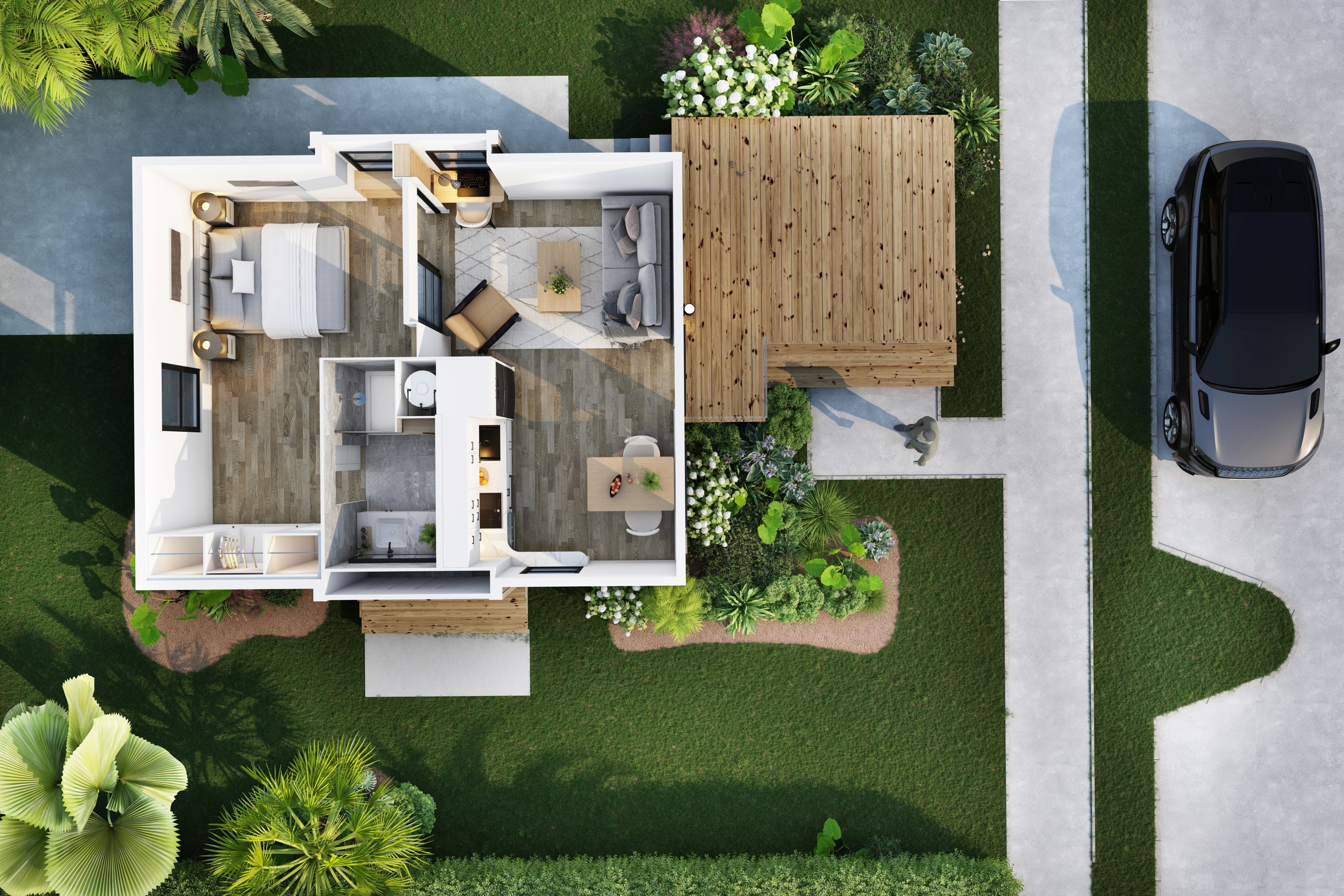
The United States is currently facing a staggering housing deficit. As of 2026, the national shortage of affordable homes continues to impact the "missing middle"—the essential workforce including teachers, healthcare workers, and first responders who can no longer afford to live in the communities they serve.
To bridge this gap, we don't just need more housing; we need smarter, adaptable housing. That is where the Mesocore Model E and its revolutionary expandable core technology provide a scalable solution for the modern landscape.
The Workforce Housing Gap: A National Emergency
Workforce housing typically serves those earning between 60% and 100% of the Area Median Income (AMI). In high-growth regions, traditional "stick-built" construction is often too slow and expensive to meet demand.
The country needs a solution that is:
Scalable: Rapidly deployable across various urban and suburban settings.
Cost-Predictable: Built in a controlled environment to avoid on-site budget creep.
Resilient: Capable of withstanding climate challenges while providing long-term value.
The Mesocore Advantage: The Power of the Model E
The Model E represents a shift in how we think about Accessory Dwelling Units (ADUs). Unlike traditional modular units that are shipped as empty shells, the Model E is built around a factory-completed expandable core.
1. Precision Engineering
The core of the Model E arrives with factory-installed electrical, plumbing, and mechanical systems. By centralizing the most complex parts of a home into a single, high-tech hub, we eliminate the need for multiple expensive subcontractors on-site, slashing construction timelines by weeks.
2. The "Grow-With-You" Advantage
A significant barrier to traditional housing is its static nature. The Model E solves this through its unique expandable architecture. The core serves as a high-tech "anchor" that can support additional square footage over time. This allows a homeowner or developer to start with a compact, efficient footprint and expand the living area as needs or budgets evolve.
3. Economic and Adaptive Flexibility
Because the Model E core contains the factory-completed "brain" of the home, it is engineered to handle the load of a larger structure. If a resident needs an extra bedroom or more living space years down the line, the core is already prepared to integrate those additions without a total mechanical overhaul. This lowers the barrier to entry for housing providers and offers a permanent, adaptable infrastructure.
Why the Expandable Core is the Catalyst for Change
By moving the "brain" of the house—the kitchen, bathroom, and mechanical hub—into a standardized, expandable core, Mesocore allows for:
Higher Quality Control: Every unit is inspected to rigorous standards before leaving the factory.
Reduced Waste: Factory construction generates significantly less material waste than traditional sites.
Faster ROI: Getting residents moved in faster means a quicker return on investment for backyard rentals or workforce communities.
Learn more about the Engineering behind the Mesocore Expandable Core
Conclusion: Building the Next Chapter
The housing crisis of 2026 requires a departure from 20th-century building methods. The Mesocore Model E isn't just a house; it's a specialized tool designed to solve the supply problem. By leveraging an expandable core that grows with its occupants, we provide the high-quality, attainable housing that our workforce deserves.
Ready to see if your property qualifies?
Start with a free ADU Space Check in minutes.
Planning your ADU starts with understanding your property.
